Showing posts with label Yoga. Show all posts

Tuesday, June 27, 2017

Men and Yoga A Yogi Views Interview with Baxter!


by Baxter
Talking with Antonio Suasys
For the first time in about a year, it happened again. Last Wednesday—although I had not exactly noticed myself—one of my long time students, Mara, leaned over to me as class at Berkeley Ironworks Climbing Gym was about to start and said, with surprise, “There are more men than women in class today!” Indeed, of the 16 lunchtime students in attendance, 9 were men. Here, our surprise is not that surprising when you consider that of the estimated 20 million Americans practicing yoga regularly in this country, the vast majority are women. In most of my classes, the ratio is around 10:1. And yet, in the history of yoga, this was not always so. In fact, prior to the 20th century, yoga was a man’s domain, although there were a few exceptions.

So what happened as yoga became popular in the US in the 60s and 70s, and then mushroomed in the 90s? Why the big gender switch? What happened to all the men that could have, maybe should have, been jumping on the yoga bandwagon?

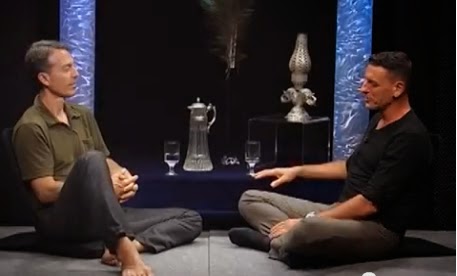
This question has been one I have long pondered, and in June of this year, I met a man at the Sytar Yoga Therapy Conference in Austin, Texas with an equal curiosity about this phenomenon. He is Antonio Suasys, originally from Uruguay, South America, and now of Marin, California, just up the road about 30 minutes from where I live. As synchronicity would have it, we had both been teaching periodically for a monthly yoga class just for men that our mutual friend yoga teacher David Moreno started a few years back. The Men’s Kula takes place on the last Sunday morning of the month, at the early hour of 7:00 am. Despite the early time, it is well attended, and the men in class seem to be happy to have found an opportunity to practice and study with other male yogis. Oddly, Antonio and I had never met in person until Austin; but once introduced, we were quickly and deeply discussing many aspects of yoga (Antonio is passionate that way!), including the topic of men and yoga. This led to an invitation from Antonio to come up to Marin and be interviewed on his weekly cable yoga TV show Yogi Views. Here's a little clip from the interview he did with me about men and yoga:
  
I am not going to give away any more of our insights on men and yoga here, but I am going to encourage you to tune into tonight or tomorrow afternoon if you’d like to see the first broadcast of our conversation! I hope that you—our YFHA family—will help spread this post around so the show is viewed by as many men as possible. Here are all the details of the broadcast:

YogiViews - Yoga for Men – Baxter Bell Part 1
COMCAST Channel 26 - AT&T Channel 99 (Marin County)
Tuesday November 25th at 8:30 pm PST, Repeat on Wednesday November 26th at 3:00 pm

Watch the program live at cmcm.tv only! It will not be archived.

Subscribe to Yoga for Healthy Aging by Email ° Follow Yoga for Healthy Aging on Facebook ° Join this site with Google Friend Connect

Tuesday, June 13, 2017

Lupus and the Eight Limbs of Yoga Cynthias Story


by Baxter
Branches with Almond Blossoms by Vincent van Gogh

One of our readers (and students) Cynthia Alleman offered to share her story with us about how yoga helped her with Lupus, an autoimmune condition where your immune system mistakes your own body tissues for foreign invaders, creating inflammation, pain, and dysfunction. So I jumped at the chance to interview her. 

Baxter: Cynthia, thanks so much for being willing to share your story with us. When did you get diagnosed with Lupus?

Cynthia: I was diagnosed with Systemic Lupus Erythematosus (SLE) January 2013. There must be a genetic predisposition in my family because my uncle and brother also have Lupus. The onset of my symptoms was pretty acute. Winter 2012 I experienced anxiety and depression, major fatigue, and the enigmatic joint aches—thinking maybe that's just how it is when you're 55. I was down and couldn't move. Blood tests with my general MD revealed Sjogren's Syndrome, and she referred me to a rheumatologist. While I had the symptoms, there were no blood markers for Lupus so the diagnosis was "Undifferentiated Connective Tissue Disease." But a year later, in January 2013, the markers were apparent in blood tests and the diagnosis changed to SLE.

Baxter: Was there anything else going on before or during this time that you feel had an impact on your new illness?

Cynthia: Stress components—I lived them. I was a single then remarried mom, working full time, going to college and then to graduate school. Going with the low level chronic stress all the time—distress! For the past 18 years I have worked as a Speech Language Pathologist in public schools, the majority in high school and junior high school. Winters, mid-school year, have always been stressful, with what I called “February Funk.” Life funk.

Baxter: What happened since then? You told me that you have actually been doing very well for the last two years or so. 

Cynthia: That’s right. At doctor visits two and three years after the initial diagnosis (July 2015 and January 2016), I have been free of most symptoms, and the rheumatologist reports that the Lupus is not active and blood work is stable.

Baxter: How do you account for this dramatic shift in your health? 

Cynthia: Yoga asana classes for 20+ years planted seeds. Along with the shining example of my almost 80-year old yogini mother, my family doctor opened the door to yoga by writing a prescription for it in 1993!) which led to a more consistent practice for the last four years. The last years included a year plus of yoga teacher training and almost two years of teaching one yoga class a week. Along with developing a home asana practice, a nice side benefit of teaching, learning the “Ashtanga” of yoga has been life changing!

Baxter: You're referring to the eight limbs of yoga as described by Patanjali, right? Are there certain ones that have been particularly helpful? 

Cynthia: Yes! The core to everyday for me is dhyana (practice of meditation) which I have done daily for the last three to four years. This practice consistently leads me to the insight of two of the yamas: ahimsa (nonviolence) and satya (truthfulness). Realizing a truth that my lifestyle was killing me—literally my body was attacking itself—made me take steps to change. This included walking and not always running, and backing off of the intensity on the mat and in my many activities of life. As with many principles of yoga and meditation, I learned to turn ahimsa and satya to myself as well as to others.

Baxter: What other limbs have played a part in improving your condition?

Cynthia: Asana plays a huge part in my health. I feel strong and my joints are free moving. Occasionally my hips and lower back talk to me and occasionally I take Aleve. But that is the only medical treatment I use for the Lupus. I do asanas as much for my mind and heart as I do for my physical body. I think the home practice has made a difference.

I have learned pranayama from the practice of asana and dhyana. Finding the breath, moving with the breath, and controlling the breath has helped with dharana (concentration) and pranayama. They both help calm the anxiety and depression.

The Ashtanga is not linear. The dhyana circles back to the yamas and niyamas. As with all the practices ,I don't have all if them—or even some of them—all the time, just glimpses. If samadhi is deep joy and peace, glimpses appear. 

Baxter: Speaking of the niyamas, how have those fit in? 

Cynthia: Spaciousness in my life comes from these niyamas:
  • Saucha (cleanliness)—having the discipline and routine of daily practice.
  • Santosa (contentment)—my life contains multitudes more joy and contentment than previously. Even when rough spots show up, I have the gratitude to be joyful in them
  • Tapas, (zeal, heat)—my passion for life is still there and so is the self-knowledge to know it's boundaries.
  • Svadhyaya (study of sacred scriptures and of self)—includes for me the zeal of study and the revealing of self that meditation (dhyana) offers. 
Baxter: That’s pretty comprehensive. Are there any other aspects of the Ashtanga of Yoga you want to mention? 

Cynthia: Lupus made me pay attention. Dhyana, svadhyaya, and isvara pranidhana (surrender) helped me to see my life and conditions for what they were and are. I paid attention to what my body continued to tell me, for example, not sleeping at night or digestion out of whack. I sat with all this for many months before making decisions, and the 2016 school year started without me, as I retired and let go of that stress and worry. I am getting needed sleep and feeling back to normal. I have to be careful what and when I eat and drink. Santosa is never far, even as other tough situations come up in life, because life is like that. And given everything, I have not been happier in my life than I am now. Here I must express heartfelt gratitude to my teachers on this yoga life path, Namaste!

Baxter: Cynthia, your story is inspiring, and obviously an ongoing one. Thank you so much for sharing your experiences with our readers. And all the best in the future! 


Cynthia Alleman, RYT200, from Shanti Yoga Teacher Training, enjoys a more slow-paced life in Boise Idaho. Sharing the gift of yoga, she teaches yoga at Thrive Chiropractic and Terraces Senior Community. You can reach her at ckalleman@gmail.com

Subscribe to Yoga for Healthy Aging by Email ° Follow Yoga for Healthy Aging on Facebook ° Join this site with Google Friend Connect

Friday, June 9, 2017

Reasons for Doing Yoga


by Nina
Bees Sipping Nectar by Michele Macartney-Filgate
Yesterday in his post Yoga for Healthy Eating, Baxter wrote about a study that showed that obesity in modern societies was not caused by our sedentary lifestyle but instead by our eating habits. But the fact is, our current culture is a very sedentary one, and if weight loss isn’t a good reason for exercising, there are many, other important reasons, including both physical and mental health. If you’ve been reading our blog for any amount of time, you’ll surely have noticed that we’re strongly encouraging exercise in the form of yoga asanas as one of the most important strategies for fostering for healthy aging.

By chance on the same day Jane Brody of the New York Times addressed the issue of motivation for exercise (see Changing Our Tune on Exercise) by saying that the usual reasons experts give for encouraging us to exercise, including a desire to lose weight or improve your figure, to keep heart disease, cancer or type 2 diabetes at bay, to lower your blood pressure or cholesterol, to protect your bones, and to live to a healthy old age, turn out not to be good motivators for people. Instead, it's the short-term benefits of feelings of well-being and happiness that keep us exercising:

Now research by psychologists strongly suggests it’s time to stop thinking of future health, weight loss and body image as motivators for exercise. Instead, these experts recommend a strategy marketers use to sell products: portray physical activity as a way to enhance current well-being and happiness.

Doesn’t that sound like one of the real purposes of yoga? Many years ago, my then teacher Rodney Yee, asked me why I did yoga, and struggling to find the right (and truthful) words, I could only come up with the following:

It makes my life better.

I went on to say that I almost always felt better after taking a yoga class or practicing at home on my own. And that is what kept me coming back to my mat day after day. Of course, I’m delighted that the practice I’ve chosen will have most likely provide many significant long-term benefits for me (and I can already see that I’m aging well compared to more sedentary people my current age), but in the meantime, I’ll be practicing today because, well, it makes my life better. Jane Brody put it this way in her article:

I walk three miles daily, or bike ten miles and swim three-quarters of a mile. If you ask me why, weight control may be my first answer, followed by a desire to live long and well. But that’s not what gets me out of bed before dawn to join friends on a morning walk and then bike to the Y for my swim.

It’s how these activities make me feel: more energized, less stressed, more productive, more engaged and, yes, happier — better able to smell the roses and cope with the inevitable frustrations of daily life.


For more information, see the original study Brody references, The role of motives in exercise participation.

Subscribe to Yoga for Healthy Aging by Email ° Follow Yoga for Healthy Aging on Facebook ° Join this site with Google Friend Connect

Tuesday, May 30, 2017

Vagal Tone and Yoga


by Ram
Have you ever noticed that a segment of our population consists of people whose body, brain, and mind are more stable and robust under all kinds of situations? These folks are not perturbed by opulence or adversity, and can maintain their equanimity during excitement, enthusiasm, and eagerness or dull, tragic, and dispassionate moments. These individuals tend to be healthier and more resilient, and are classified as people with “high vagal tone.” Such people are more resilient under stress, and can easily shift from an excited state to a relaxed state and vice versa without getting unduly perturbed. These individuals not only easily wade through stressful situations, but they tend to have good resistance power and are healthier. 

In contrast, people with low vagal tone are more sensitive to stress and can easily fall prey to disease. They tend to have challenges such as weak digestion, fluctuating heart rate, and difficulty managing emotions. Furthermore, people with low vagal tone are easily perturbed, have weak digestion, and frequently suffer from physical, mental, and emotional disturbances. Low vagal tone is correlated with such health conditions as depression, anxiety, chronic stress, and pain. 

In summary, a higher vagal tone is linked to physical and psychological wellbeing. A low vagal tone index is linked to inflammation, negative moods, loneliness, and heart attacks. So what exactly is vagal tone? Vagal tone defines the functional status of the vagus nerve and is the degree of activity within the parasympathetic nervous system. The vagus nerve, which is the 10th cranial nerve and the largest of the cranial nerves, relays information between the brain and other internal organs. It starts at the base of the skull and innervates the respiratory and digestive systems thereby connecting these areas with the nervous system. From the base of the brain, the vagus nerve extends all the way down to the neck, chest, and abdomen, and provides information about the state of the body's organs to the central nervous system. Thus, the vagus nerve is responsible for a myriad of tasks, including heart rate, breathing, respiration, and digestion, peristalsis of gut, small intestine and colon, sweating, muscle movements in the mouth, speech, and hearing. It’s no wonder that optimal physiological functioning is a direct reflection of the functional status of the vagus nerve. 

Better prognosis is predicted by optimal vagal tone especially in people who are recovering from chronic diseases. Furthermore, the immune strength and resilience of an individual directly depends on the activity of the vagal nerve. The vagus nerve constantly sends sensory information about the state of the lower body organs to the brain. Gut feelings and instincts are emotional perceptions transferred to the brain through the vagus nerve. Thus, when we use the phrase “gut feeling,” we are unconsciously referring to “the status of the vagus nerve.” 

How does all this relate to yoga? Several research studies suggest that yogic practices such as pranayama, or breathing techniques, can significantly increase vagal tone and improve symptoms of a variety of conditions, including diabetes, chronic pain, anxiety, and depression. In a paper Effects of Yoga on the Autonomic Nervous System, Gamma-aminobutyric-acid, and Allostasis in Epilepsy, Depression, and Post-Traumatic Stress Disorder, a group of researchers hypothesized what may be the underlying physiological mechanism(s) by which yoga impacts the vagal tone and thus the body and brain. After gathering evidence from previously published literature and analyzing all the data, this group hypothesized that yoga helps regulate the nervous system by modulating the vagal tone thereby reducing the “allostatic load” (allostatic load is the cumulative wear and tear on the body or the total stress that we accumulate over time).

The authors believe that uncontrolled chronic stress:
  1. Creates an imbalance of the autonomic nervous system (ANS) by decreasing the activity of the parasympathetic nervous system (PNS controls body process during normal situations, and is sometimes called the Rest and Digest response) and increasing the activity of the sympathetic nervous system (SNS prepares the body to deal with stressful situations and is also referred to as Fight or Flight response). See Understanding Your Autonomic Nervous System for information.
  2. Lowers the activity of gamma amino-butyric acid (GABA) system, the primary inhibitory neurotransmitter system (GABA plays a central role in suppressing excess neural activity throughout the nervous system). See Anxiety, Yoga, and Brain Chemistry for information.
  3. Elevates the allostatic load. 
Yoga-based practices stimulate the vagal tone thereby increasing the activity of the PNS and GABA systems and reducing the allostatic load. When it comes to specific diseases/ conditions, the authors state that that depression, epilepsy, post-traumatic stress disorder (PTSD), and chronic pain, which are all characterized by low vagal tone, high stress and low GABA activity, show improvement with yoga-based interventions. The researchers believe that the reason yoga-based interventions help is because of its positive impact on vagal tone. These observations suggest that conditions/diseases with an underlying reduced vagal tone can be corrected by suitable yoga-based intervention programs, resulting in amelioration of disease symptoms. 

While we wait for more research studies that will shed light on how yoga is effective in alleviating mental and physical health problems, let’s continue our abhyasa of yoga!

Subscribe to Yoga for Healthy Aging by Email ° Follow Yoga for Healthy Aging on Facebook ° Join this site with Google Friend Connect

Wednesday, May 24, 2017

Baxters Yoga U Online Course on Core Integrity and Balance


by Nina
Baxter believes that core integrity and balance can be more important than bone mass in preventing fractures as we get older. So he created a special online course for Yoga U Online on the best ways to strengthen the complex group of muscles and structures of your core in a balanced way. In this two-part course, he also shows you how to use yoga to facilitate greater neuromuscular integration and balance.

Here’s what you’ll learn: 
  • What is meant by core integrity and how it impacts you
  • How to wake up your core and re-balance your body
  • Which yoga practices and breath work you can use to foster integrated strength and agility
The course includes: 
  1. Yoga Practice for Balanced Core Strength: For this course, Baxter created a special yoga practice that focuses on developing core strength in a balanced, holistic way and on improving neuro-muscular coordination. 
  2. Recordings of Both Sessions: You will get MP3 & MP4 recordings of both sessions, enabling you to go back and listen to the workshop as many times as you like.
  3. Transcripts of Both Sessions: The transcripts allow you to study any portion of the course in more depth or to obtain direct quotes from Baxter
The Yoga U Core Integrity and Balance webinar starts tomorrow, with the second part being presented next:

Tuesday, December 9 & Thursday, December 18, 2014
8:30 pm Eastern / 5:30 pm Pacific 

To register, go to Core Integrity and Balance Registration.

Although there is a charge for the course itself, here's some free stuff from Baxter on the site:

For a sneak peek at some of the slides included in Baxter’s course, go to: Core Integrity and Balance Sneak Peek.

For downloads of free interviews with Baxter, go to: 

Audio Interview with Baxter #1  

Audio Interview with Baxter #2 

Subscribe to Yoga for Healthy Aging by Email ° Follow Yoga for Healthy Aging on Facebook ° Join this site with Google Friend Connect

Monday, May 22, 2017

List of Top Yoga Blogs


by Nina
The popular doyouyoga.com web site recently announced their picks for Best Yoga Blogs of 2016, and we made the cut! Thanks so much doyouyoga.

Here’s what they said about us:

“Yoga for Healthy Aging

This regularly updated blog does what it says on the tin: with lots of information about the effects of yoga on the body and brain, Yoga for Healthy Aging supports readers to maintain their health for years to come.”

That’s a pretty good summary, isn’t it? But I want to add that we have as much about the spirit on our blog as we do about the body and brain. Sometimes people forget that although yoga provides a powerful set of tools for cultivating health of body and brain, its original aim is for cultivating equanimity. And that’s something we take very seriously at Yoga for Healthy Aging, not just because it’s yoga’s original aim but because we feel that without equanimity, aging—even healthy aging—is going to be pretty bumpy ride. Baxter emphasized this just the other day when we were talking about our basic philosophy (see Yoga for Healthy Aging: Our Philosophy and Our Tools). And just last week Beth pointed out that the “graceful” part of aging gracefully included social and spiritual grace, as well as physical grace (see LINK). For tips on cultivating equanimity, see 7 Ways to Cultivate Equanimity with Yoga.

So welcome to any new readers who come to us through doyouyoga.com! Hopefully you'll find information here to help with the health of your body, brain, and spirit for years to come.

Self-possessed, resolute, act
Without any thoughts of results,
Open to successor failure.

This equanimity is yoga. —translation by Stephen Mitchell

Subscribe to Yoga for Healthy Aging by Email ° Follow Yoga for Healthy Aging on Facebook ° Join this site with Google Friend Connect

Saturday, May 13, 2017

Anger Management Philosophy Science and Yoga


by Ram
Prickly Catcus by Brad Gibson

The Bhagavad Gita is a dialogue between Lord Krishna and Arjuna, and serves as a guiding manual for the daily conduct of life, spiritual uplift and self-realization. It is a treatise addressed to each and every individual to help him or her to solve life’s daily problems and progress towards a bright future (see also Nina’s post Acceptance, Active Engagement and the Bhagavad Gita).

Growing up in an extended family in India, we were regularly counseled by the elders on the spiritual foundations of human existence based on the principles of the Bhagavad Gita. Particularly striking and fascinating within its eighteen chapters are several references to sound mental health, which declare that the very goal of any human activity is to achieve a state of perfect understanding, clarity, renewed strength and triumph.

One particular verse that triggered my interest was regarding the death of an individual triggered by rage and anger.

Krodhad bhavati sammohah, sammohat smrti-vibhramah!
smrti-bhramsad buddhi-naso, buddhi-nasat pranasyati!!

“From anger comes delusion. From delusion loss of memory. From loss of memory the destruction of discrimination. From destruction of discrimination, the individual perishes.” —trans. by Swami Chidbhavananda

According to the textual commentary, the ignorant mind thinks that worldly objects will give it pleasure and happiness. Continuous thinking about the objects of senses creates attachment to them. Attachment leads to desire, and when the desire is not fulfilled, one gets angry (krodha), that in turn leads to delusion (moha) and confused memory (smriti). The confusion of memory causes destruction of reasoning (buddhi) due to which an individual is ruined and dies.

I used to recall this relationship between anger and death during my college days and as a graduate student in neurosciences. How did these divine preachers suspect that anger could trigger the demise of an individual? Is there a causal relationship? What molecular pathways connect rage/anger to the death of a person?

Research from several diverse groups, including health professionals, behavioral scientists, psychologists and others, indicates that rage and anger are definitely hazardous to health. A high level of rage/anger has a powerful effect on the incidence of preventable cardiovascular death. Evidence indicates that anger evokes physiological responses that are potentially life threatening in triggering Coronary Heart Disease (CHD).

“When we are angry, not only do we spew out negativity to someone else, but our own body chemistry changes, and these changes can be harmful to our health” —James S. Brooks & Peter Anselmo from Ayurvedic Secrets to Longevity & Total Health

Anger triggers increased platelet activation and thrombosis, resulting in unwanted, pathological, and life-threatening clot formation. Anger also increases vulnerability to illnesses, compromises the immune system, increases lipid levels, exacerbates pain, and produces vasoconstriction of narrowed arteries. Finally, anger has been associated with chronic over-stimulation of the sympathetic nervous system. This increased sympathetic activity has been shown to result in increased blood pressure and heart rate, and alterations of ventricular function.

In addition, anger triggers the release of free fatty acids into the bloodstream, and elevates the levels of circulating catecholamines and corticosteroids, all of which ultimately trigger heart disease. According to the American Heart Association and National Institute on Aging, CHD patients with higher levels of anger/hostility are also more likely to engage in CHD-risk behaviors, such as, smoking, overeating, decreased physical activity, decreased sleep, and increased use of alcohol and drugs. Thus, it is imperative to understand the significance of the pathways that connect anger to death. Once a seeker understands these pathways, he or she can then master the technique of controlling/processing the anger process.

In the post by Nina, Baxter recommends pranayama techniques and certain specific asanas to curb anger and achieve calmness. Another method to control/process anger is through meditation (dhyana), the cheapest and simplest recourse to a healthy body and mind.

Meditation transcends gender, race, skin color, profession, monetary status and, above all, religion. It does not require any elaborate setup, materials, clothes, space, doctors, nurses, or hospitals. Anyone who has the time and interest can practice meditation. Its benefits are immense and it is becoming mainstream. While meditation does not cure a person of anger, a person who has a meditation practice sees and reacts to anger differently. The individual will not only have the capacity to transcend the anger process but this person will not evoke the same physical and emotional reactions that are commonly seen in a person who does not meditate. Awareness to the thought and its flow, and awareness to anger arising inside can have remedial effects. And all this can be helpful in the journey to the center.

Subscribe to Yoga for Healthy Aging by Email ° Follow Yoga for Healthy Aging on Facebook ° Join this site with Google Friend Connect

Monday, May 8, 2017

Do You Really Need Knee Replacement Surgery Maybe Yoga Can Help Instead


by Nina
Nude Woman on Her Knees by Michelangelo
“If you do not have bone-on-bone arthritis, in which all of the cushioning cartilage in the knee is gone, think about consulting a physical therapist about exercise programs that could strengthen the joint, reducing pain and disability, Riddle says.” —New York Times

I’m sure that by now we all know someone who has had a knee replacement due to arthritis of the knees (see Arthritis and the Knee and Yoga for background information). But while this procedure is a clearly life changing for people who advanced knee arthritis, there is growing evidence that some people are choosing to have the procedure prematurely and are therefore gaining limited benefits from it. So many people now considering this procedure might be better off finding other ways to improve their knees, such as strengthening the muscles around their knee joints and moving their knee joints regularly through their complete range of motion.

A recent article in the New York Times Think Twice Before Choosing Knee Replacement discussed two major studies published this year, in which researchers at Virginia Commonwealth University in Richmond conducted a "surgical-validity assessment." In the studies Use of a validated algorithm to judge the appropriateness of total knee arthroplasty in the United States: a multicenter longitudinal cohort study. and Using surgical appropriateness criteria to examine outcomes of total knee arthroplasty in a United States sample., the researchers concluded that knee replacements should be recommended only for people whose knee arthritis was “medically proven to be advanced.” (“Medically advanced” in this context means not just having severe pain but also being impaired in your physical functioning, such as being unable to climb stairs, get out of a chair, or walk without aid.) The reason for this was that only those with advanced arthritis actually saw significant benefits from the surgery:

“The same researchers also found that people who were good candidates for surgery — basically, they had really bad knees — benefited substantially from the surgery, reporting much less knee pain and much better physical functioning in the months immediately following the procedure and again two years later. On one commonly used measure of knee function, their scores improved by about 20 points on average. By contrast, subjects whose surgeries the scientists deemed inappropriate did not improve much. After a year, their scores on knee function had risen by only about two points.” —New York Times

For people whose knee arthritis is not advanced, the New York Times recommended questioning the need for surgery and consulting your doctor to learn how advanced your arthritis really is. And if you make a decision to postpone the surgery and try exercise instead, yoga has a lot to offer you. Start by reading Baxter’s article on knee arthritis Arthritis of the Knee and Yoga for background information on the condition and to see which poses and practices he recommends in general.

Although this NY Times mentioned only strength building as a way to help manage knee arthritis, Shari says in her post Yoga for Osteoarthritis that moving joints through their range of motion is also essential for keeping them healthy. And this is where yoga can be especially beneficial, because the wide variety of poses allows you to move your knees through their full range of motion.

“People stop moving with arthritis because it hurts, but when you stop the joint motion you decrease the nutrition to the joint structures. The body tries to repair the area by laying down more bone to protect the area and the result is spurring, which then cause more irritation from the “bones rubbing.”

When the cartilage has deteriorated and there is no movement, the synovial fluid that bathes the inside of all synovial joints decreases, which then decreases nutrition to the joint and the cycle reinforces itself with pain=no movement=more pain with swelling and inflammation=even less movement. 

Yoga is so perfect for arthritis because it can stop that cycle by providing infinite variations in joint mobility and ways to maintain the joint alignment to improve joint weight bearing. You need to keep the joint moving in its full range of motion to keep the joint healthy, and yoga allows you to do that.” —Shari Ser

You should also consider your particular anatomical structure when thinking about managing your arthritis of the knee joints. Do you have bowlegs or knock-knees? Or do you typically hyperextend your knee joints? (If you don’t know, ask your yoga teacher or health professional to help you assess your knees for these conditions.) Because these three conditions are quite common, we’ve written specific posts on them. See:
  1. Hyperextension of the Knees and Yoga by Nina
  2. Bowlegs, Doctor Who, and Yoga by Nina 
  3. Knock-Knees, Lady Gaga, and Yoga by Baxter 
Here's to happier, healthier knees through yoga!

Subscribe to Yoga for Healthy Aging by Email ° Follow Yoga for Healthy Aging on Facebook ° Join this site with Google Friend Connect


Tuesday, May 2, 2017

Insomnia Solutions Yoga You Can Do in Bed Rerun


by Nina
Patterns in a French Garden by Brad Gibson
Did I say “in bed? Yep. It’s normally not a good idea to fall asleep when you are doing yoga (you can overstretch your muscles if you fall asleep in a restorative pose and if you’re practicing conscious relaxation, well, being unconscious pretty much negates the positive effects you’re aiming for). However, there is one exception to this rule of thumb: when you’re lying in bed sleepless due to insomnia.

Whether you have trouble falling asleep initially or can’t fall back to sleep after waking in the middle of the night, instead of working on your To Do list (it’s tempting, I know), try a little yoga. There are a number of yoga practices that just might help you relax enough to finally drift off to sleep and/or improve the quality of your sleep. While practicing any of these techniques, be sure to stay warm and keep the lights off to keep stimulation down to a minimum.

Breath Awareness. This is the simplest yogic breath practice and one of the most basic forms of meditation. Simply bring your awareness to the sensations of your natural inhalations and exhalations. When you notice your mind wandering to your To Do list or elsewhere, gently return your mind to your breath.

Extending Your Exhalation. After observing your natural breath for a few minutes, you can try extending your exhalation (while inhalations are slightly stimulating, exhalations are naturally relaxing). When you reach the end of your exhalation, instead of immediately inhaling, lengthen your inhalation by one or two beats. Keep it relaxed, and if at any point you find the practice irritating, return to your natural breath.

Silently Reciting a Mantra. Just as you would when you are meditating, you can use a silent mantra or any word or phrase in bed to keep your mind from drifting into anxious thoughts. This is helpful for those of you who don’t find focusing on the breath effective (or when you have a cold!). When you notice your mind wandering from your mantra to your To Do list or elsewhere, gently return your mind to your mantra.

Guided Relaxation. Following the instructions for a guided physical relaxation (see here), with or without ear phones, allows you to focus your mind on a soothing voice and your physical sensations, enabling some people to drift off to sleep.

Self-Guided Relaxation. When you are familiar with the basic instructions for deep physical relaxation, it’s simple enough to skip the relaxation track and just gradually relax your body by following your own instructions. Many years ago, my first yoga teacher recommended this as insomnia practice.

Slight Inversion. Take the pillow out from under your head and lie on your back with your knees bent. Lift your pelvis up and place the pillow underneath it. You’re now in a very low version of Supported Bridge pose, a gentle inversion that naturally triggers the relaxation response. Try to stay in the position for five to ten minutes.

Supported Forward Bend. If you sleep alone or aren’t worried about disturbing your partner and you find forward bends soothing, you could try a supported bend in your bed. Sit with your legs straight or in crossed-legs position (whichever is more comfortable and allows a deeper forward bend) and place a stack of pillows on top of your straight legs or in front of your crossed legs. Then lengthen your spine forward and rest your forehead and arms on the pillow and relax. Try to stay at least three minutes. If you can’t get comfortable in the pose, then this one isn’t for you.

If you suffer from insomnia, I sincerely hope you’ll find something on this list that will help. Most of these are techniques are ones I’ve found useful myself (I'm a bit too lazy to sit up and try an actual pose, however). Readers, if you have any additional suggestions, please chime in!

Subscribe to Yoga for Healthy Aging by Email ° Follow Yoga for Healthy Aging on Facebook ° Join this site with Google Friend Connect

Sunday, April 30, 2017

Yoga for Grief Anger and Shame


by Robin Sturis
Phoenix by Hokusai
I originally found my way to a health club yoga class to find relief from stress and pain and I found the relief that I was seeking, but for the most part I was only showing up physically and temporarily releasing muscular tension. I did become a yoga teacher after that to help others find the stress relief that I was experiencing, but it took a lot of time before I figured out how to work with emotions on the mat. 

In 2008, after about eight years of teaching yoga, I entered a Masters in Clinical Mental Health program, where I was encouraged to look at my emotional baggage as part of the program. About a year in, my body started talking loudly to me again in the form of pain. In my search for relief, I found Phoenix Rising (PR) Yoga Therapy. At that time, I considered Phoenix Rising to be a self-care break as I proceeded with my degree. I now know it to be a way of living fully. 

Phoenix Rising combines traditional yogic philosophy with modern self-help psychology. Self-awareness is the focus. A truly embodied mindfulness meditation in action is facilitated through the use of asana and dialogue, encouraging participants to be present to their inner landscapes and emotional lives in the best way they can in each moment. It encourages us to take an aware, embodied approach to making empowered life choices.

During the three years in which I trained in Phoenix Rising as a yoga teacher and then a yoga therapy practitioner, I looked deeply into myself in both my graduate program and my yoga training. At the same time my husband battled cancer and won and two dear yoga teachers also faced health battles, one of whom did not win. I myself recovered memories of physical assault, worked on the emotions surrounding my own chronic health issues, and worked deeply on the emotional baggage of being raised by an abusive narcissist. In other words, I worked with grief, anger, and shame. 

One of the ways that Phoenix Rising supported me in this and taught me to support others is through holding space. Holding space is the challenging process of being fully present to another without judgment, trying to fix, or having any expectations of outcomes. Many people have never had this experience. It can be moving and transformative. It helps us to begin to see that we have value in our own right, that we are worthy of love and acceptance and that we can choose to be with ourselves in a way that is likely different than anything we have previously experienced. It helps us to begin to understand that our self is not our Self and that we are more than what we have been taught we are, that we are more than our thoughts and emotions, that we are Divine beings just as we are. The yogic concept of “born Divine” is alien to most westerners. I was so steeped in the idea that we have to earn love that I consider it a deep samskara, a mental rut into which I still fall. 

Through the course of a Phoenix Rising class or therapy series we learn how to wait for the mud of experience and reaction to settle so that we can see more clearly and look deeper at our inner experience. In my case, I held anger toward my mother for not being what I would have wanted her to be and for not giving me the emotional tools needed to navigate a healthy life. As I looked deeper I saw under that anger was a profound grief, a grief for the idealized mother I never had, grief for the child that suffered, and eventually grief for the emotionally damaged person that was my mother. As I looked deeper still I saw shame: shame at having these “negative” emotions, shame at not being able to better handle or hide them because no one wants to be around negativity, and shame at not being good enough, not being lovable, being to emotional…. I also felt shame and responsibility for being victimized. 

But the process of Phoenix Rising helped me—and I now offer this same help to others—to be embodied in a mindful way not just in a special posture or series designed for this, but in also learning I already have the tools and knowledge to figure things out for myself. It taught me how to look and listen within, and how to hold space for what I found. It taught me to listen to what my body, mind, and emotions might need in yoga practice and in life. And it taught me through experience that nothing is permanent; not my thoughts, emotions, life circumstances, or beliefs. 

As I let go of believing that I was a victim, I became empowered to determine what I wanted and make decisions for myself based on what was best for me. This enabled me to cut ties with my mother, and to withstand the judgment of others about that choice. That was when the healing began for me. 

Like me, most of the people I have talked to about this topic feel that the emotions of grief, anger, and shame do not occur alone. As we grieve, we can find feelings of anger about the loss and shame for being angry. This is reflected in the Kubler-Ross model of grief, which lists anger as the second stage of grief. Also, when anger is the primary emotion, we are likely to find grief as we look deeper. Shame is harder still to acknowledge and express. 

I am also struck by the—sometimes invisible—cultural attitudes toward these emotions. In Western culture, difficult emotions tend to be avoided. We deny, we self-medicate, we blame shift—we do many things to not feel. It is also interesting that, when asked about grief, people almost always speak of the loss of a loved one. This is certainly one of the most painful losses we can experience, but let’s not ignore the multitude of other losses that can be a part of the fabric of our lives. Do you experience grief over a lost job, a financial setback, lost health, the betrayal of a friend or lover, or an unfulfilled dream? People often avoid discussing their anger, choosing instead to focus on grief. Yoga in general and Phoenix Rising in particular provides us with the space and context to feel and process all of our emotions. 

In yogic philosophy, we are taught that one of the ways to move beyond is to move through, to remain open and allow. In this context, I suggest that “moving beyond” is not forgetting, being all better, or giving up. What I refer to is the ability to move beyond the constant reaction of the small “s” self into the ability to live an increasingly full human life while holding space for what you have lost, to find meaning in a life after the loss. This is a process. At first it might seem frightening. I often hear people say that they shut these emotions down because they are afraid that if they open to them they will never stop crying. But we do. And each time we allow ourselves to feel them they are a little easier to hold. With time they pass through us more smoothly, can even become friends—or at least familiar and less overwhelming visitors. In the words of a mentor, we can “learn to put them in the back seat instead of letting them drive the car.” 

Western culture talks of negative emotions, but yoga teaches us that emotions are just emotions. They arise and fall, like the breath, like thoughts. It is possible to hold space for them, to recognize them, to care for ourselves even as we allow them to pass through us. This, too, is part of being human, embodied. It is a part of the richness of this life, what we are here to experience. It is when we get caught up in the stories of the small “s” self that we move into reaction and become overwhelmed.

The only person who can fully understand your experience of grief, anger, and shame is you. I offer you this story and the accompanying thoughts in the hopes that you might be able to draw some helpful information or a sense that you are not alone in this process of navigating a human existence and all of the myriad challenges it offers.   

Robin Bateman Sturis holds an MS in Clinical Mental Health Counseling and is a yoga teacher living in southwestern Florida, USA. She loves to read, write, study yoga and the human mind, travel, and hang out with her husband Jeff and her dog Molly. 

Subscribe to Yoga for Healthy Aging by Email ° Follow Yoga for Healthy Aging on Facebook ° Join this site with Google Friend Connect

Thursday, April 27, 2017

Yoga Philosophy of the Day Part 2


by Nina
Almost immediately after I published my post on Monday Yoga Philosophy of the Day, which was about cultivating equanimity in the face of difficulty and “enemies,” I was sorry I hadn’t mentioned the United States election (post posting remorse?). Because for many of us Americans, this election has been extremely divisive, with the feeling on both sides that those in the opposing camp were our “enemies.” I even know people who stopped speaking to those who disagreed with them over candidates and issues. And I confess that I, too, got swept up in some very negative feelings.

Now, this morning, after very intense night, the results are in and the battles are over, for now at least. However, I find that there is still a great deal of intense feeling remaining, on both sides. Gloating, anger, bitterness. Even Big Bird wasn't being as nice as usual. So maybe it’s not too late to add to what I wrote on Monday after all!

If we practice yoga the way the Bhagavad Gita defines it, we’ll need to step back from these negative feelings. As I quoted on Monday:

He looks impartially on all:

those who love him or hate him,

his kinsmen, his enemies, his friends

the good, and also the wicked.


This doesn’t mean we shouldn’t work for the political causes we believe in. As The Bhagavad Gita says:

He who performs his duty

with no concern for results

is the true man of yoga—not

he who refrains from action.


And, after all, it was Mohandas K. Gandhi, one of the great political activists of all time, who called The Bhagavad Gita his “mother” and believed in its message of “skill in action.”

The wise man lets go of all

results, whether good or bad,

and is focused on the action alone.

Yoga is skill in actions.

Now the challenge for all of us is to put this into practice. (See my original post Yoga Philosophy of the Day for information about what The Bhagavad Gita recommends as the way to achieve this.)

I was also thinking about how cultivating equanimity in the way The Bhagavad Gita recommends pertains to healthy aging. Of course, maintaining equanimity in the face of difficulty of all kinds helps make our lives better (and our bodies healthier). But also, as older people, most of us want to make a better world for those who come after us, whether that means for our own family members or for the next generation as a whole. And this will only be possible if we can all work together, friends and enemies alike.

Subscribe to YOGA FOR HEALTHY AGING by Email ° Follow Yoga for Healthy Aging on Facebook 

Saturday, April 15, 2017

Yoga Lowers Heart Disease Risk as much as Conventional Exercise


by Nina
Walk Along the Banks of the Seine Near Asnieres by Van Gogh
“A recent review of yoga and cardiovascular disease published in the European Journal of Preventive Cardiology indicates that yoga may help lower heart disease risk as much as conventional exercise, such as brisk walking.” — Julie Corliss, Harvard Health Blog

Well, that sentence from More than a stretch: Yoga’s benefits may extend to the heart certainly merits a closer look, don’t you think? Because even though we’ve written extensively about the benefits of yoga for cardiovascular health (see 
About Yoga for Heart Health), I’ve never actually seen scientific proof that yoga really is as good for heart health as—as this quote says—a brisk walk.

The report on the Harvard Health blog was referring to the study The effectiveness of yoga in modifying risk factors for cardiovascular disease and metabolic syndrome: A systematic review and meta-analysis of randomized controlled trials in the European Journal of Preventive Cardiology. This turns out to be one of those review studies that assesses other existing studies, in this case, 37 randomized controlled trials (RCTs) in the systematic review and 32 in the meta-analysis, which can provide a very good picture of what the current research is turning up. The review study itself says:

“Whereas previous reviews have looked at a single or a few risk factors, our review updates the existing literature and encompasses numerous CVD and metabolic risk factors that can be used to calculate overall CVD risk.”

The studies that were reviewed looked at different types of yoga, including both gentler and more energetic styles, and the participants ranged from young, healthy individuals to older people with health conditions. Interestingly, there were no restrictions on the frequency of yoga practice or its duration. (Although I guess we can assume no studies were done with people practicing yoga just once a month!) In the review, the control groups used in the studies were divided into aerobic exercise (physical training, aerobic exercise, cycling, running, brisk walking) and non-aerobic exercise groups. This allowed the researchers to estimate the effectiveness of yoga practice compared to both active controls and versus non-active controls.

Overall, the people who did yoga improved in several factors that affect heart disease risk: losing an average of five pounds, lowering blood pressure by five points , and lowering their levels of harmful LDL cholesterol by twelve points. And no significant difference was found between yoga and exercise!

For those of you who are interested in more detail, the study itself concluded that compared to non-exercise controls, yoga showed significant improvement for:

  • Body mass index (−0.77 kg/m2 (95% confidence interval −1.09 to −0.44))
  • Systolic blood pressure (−5.21 mmHg (−8.01 to −2.42))
  • Low-density lipoprotein cholesterol (−12.14 mg/dl (−21.80 to −2.48)) and high-density lipoprotein cholesterol (3.20 mg/dl (1.86 to 4.54))
  • Body weight (−2.32 kg (−4.33 to −0.37))
  • Diastolic blood pressure (−4.98 mmHg (−7.17 to −2.80)), 
  • Total cholesterol (−18.48 mg/dl (−29.16 to −7.80)), 
  • Triglycerides (−25.89 mg/dl (−36.19 to −15.60)
  • Heart rate (−5.27 beats/min (−9.55 to −1.00))
The original review study concluded: 

“Our review finds emerging evidence to support a role for yoga in improving common modifiable risk factors of CVD and metabolic syndrome.

“We believe that these findings have important implications for the acceptance of yoga as an effective therapeutic intervention. This review demonstrates the potential of yoga to have an impact on concrete, physiological outcomes that represent some of the greatest health burdens today.”

The Harvard Health blog interviewed Dr. Gloria Yeh, a co-author of the review and an associate professor of medicine at Harvard Medical School. She said, “Yoga is unique because it incorporates physical activity, breathing, and meditation.” And she explained that each of these elements positively affects cardiovascular risk factors, so combining them was bound to show a benefit. 

See About Yoga for Heart Health for an overview of and links to all the posts—including practices designed especially for heart health—that we have on our blog.

Subscribe to Yoga for Healthy Aging by Email ° Follow Yoga for Healthy Aging on Facebook ° Join this site with Google Friend Connect

Yoga Has No Age Limits


by Beth
Lily by Piet Mondrian
I am a firm believer that yoga is for everybody and every body at any age. As we become elderly, the time will come when a decision needs to be made to age at home or in an alternative living community. But either way we can all continue to take advantage of the benefits of yoga!

You may remember my post Never Too Late: Yoga for the Fourth Age about Norma, a woman in her eighties who has been coming to twice weekly yoga classes for the past two years. At that time she was one of my oldest students, and in spite of several health issues she still continues to maintain her positive attitude toward life. Norma lives in a supportive, independent living community for older adults. Recently I encountered another like-minded soul in a very different living situation.

I teach a chair yoga class at a local nursing and rehab center whose mission is to meet the needs of individuals who require short-term rehabilitative care or long-term skilled nursing care. Most of the participants are confined to wheelchairs and have limited physical movement. Many are stroke victims, hearing impaired, or are dealing with a variety of other difficult physical and mental health conditions. For those who can move a lot or a little, I encourage them to do the best they can. For those who cannot move even a little, I encourage them to visualize the movements in their mind’s eye and “see” themselves moving even if the body is not able to cooperate. The main focus of the class is to provide simple movements to keep the participants physically active because they sit for prolonged periods of time. I also offer them calming pranayama practices to help them deal with stress.

Recently, I welcomed a new student to the class, who I’ll call Lily. Lily arrived with her daughter who pushed her wheelchair into the circle. I put her age at late eighties. The first thing she did was to attempt to kick the wheelchair footrests out of the way so she could move her legs. She smiled and thanked me when I went to help. She clearly intended to participate fully. And participate fully she did! Her bright eyes followed along as I demonstrated the poses. She moved her arms and legs surprisingly well in the Seated Staff Pose (Dandasana) Flow and did her Ahhh Breathing with gusto.

At the end of the class, her daughter, who had also participated, told me how much she and her mother enjoyed the class and that both of them would be coming back. As I packed up my things to leave, the center’s recreation director came out of her office to tell me that my new student was 102 years old! And, yes, she and her daughter have come back to class. Here are the two practices that Lily enjoyed:

Seated Staff Pose (Dandasana)Flow

Benefits: Energizing full body stretch.

  1. Begin in Seated Mountain pose, with your feet on the floor and your arms resting by your sides.
  2. Inhale and raise your left leg up parallel to the floor.
  3. Exhale and bend your knee and lower your left foot to the floor.
  4. Inhale and raise your right leg up parallel to the floor.
  5. Exhale and bend your knee and lower your right foot to the floor.
  6. Inhale and raise both legs up parallel to the floor.
  7. Exhale and bend your knees and lower both feet to the floor.
  8. Inhale and raise your left arm forward and up overhead.
  9. Exhale and lower your left arm.
  10. Inhale and raise your right arm forward and up overhead.
  11. Exhale and lower your right arm.
  12. Inhale both arms forward and overhead.
  13. Exhale and lower both arms to your sides.
  14. Inhale and raise both legs and both arms. Flex your feet.
  15. Exhale and hold the pose for 1 to 3 breaths.
  16. Exhale and lower your arms and legs.
  17. Repeat steps 6 through 8 two more times.
  18. Rest
Ahhh Breathing

Benefits: Cooling, Calming, Releases Tension. Joseph and Lilian LePage use this breath practice as part of their Healthy Heart Program in Southern Brazil.

  1. Begin in Seated Mountain pose with your feet on the floor and your arms resting by your sides.
  2. Inhale as you raise both shoulders up toward the ears.
  3. Exhale with a soft "ahhh" sound as you lower your shoulders.
  4. Repeat three times or more as long as you are comfortable.
  5. Rest.

Subscribe to Yoga for Healthy Aging by Email ° Follow Yoga for Healthy Aging on Facebook ° Join this site with Google Friend Connect